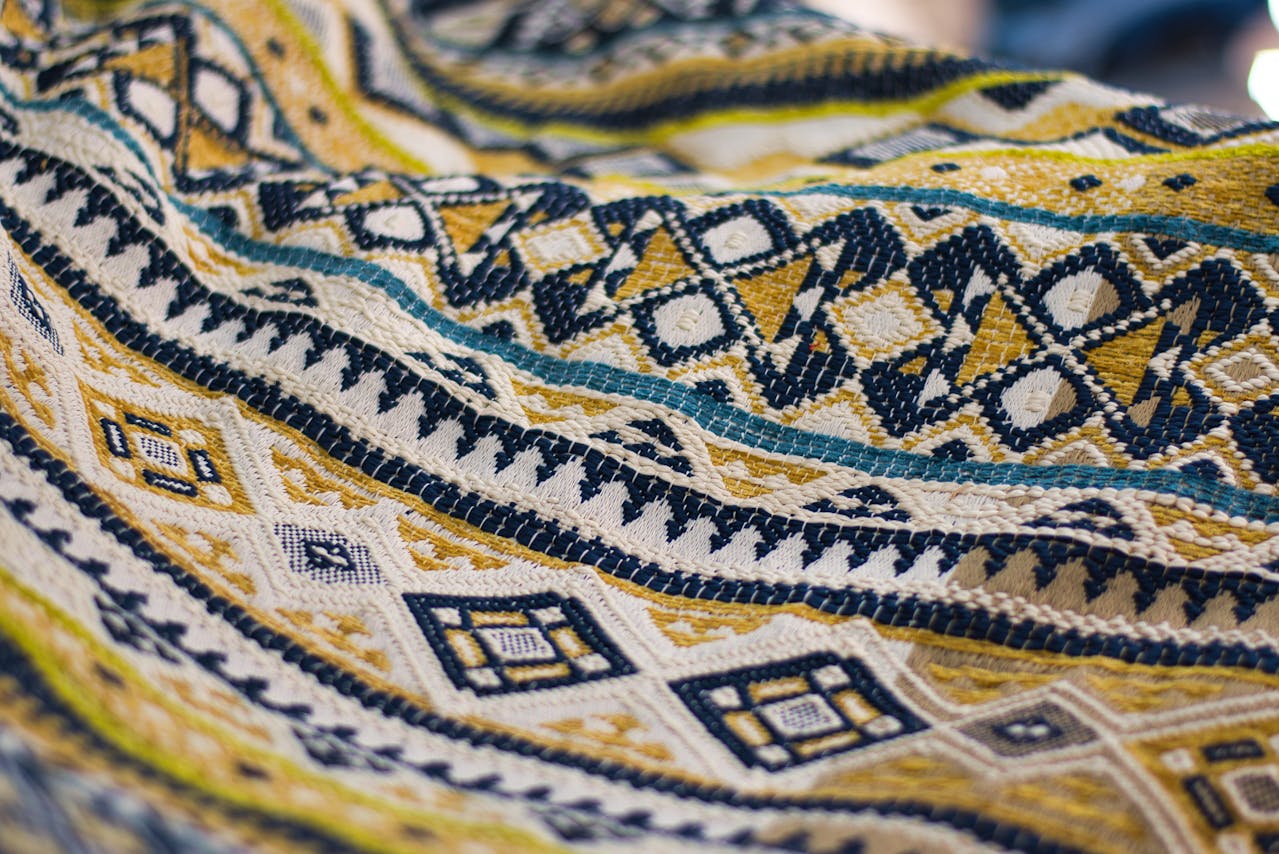
For Andrea Vella Borg, a genuine appreciation of fashion is impossible without understanding the craft traditions that gave it shape — and most fashion enthusiasts, he believes, have only scratched the surface.
Craft traditions are the foundations on which fashion has always been built — the accumulated technical knowledge, material expertise, and making practices that make clothing possible at every level from the utilitarian to the extraordinary. Yet, they are among the least discussed aspects of fashion in mainstream culture, where attention tends to go to the finished object rather than the processes that produced it. Andrea Vella Borg has spent years developing a serious understanding of the craft traditions most relevant to fashion, guided in part by his wife Julia’s background in textile history. The nine traditions he considers essential offer a starting point for anyone who wants to understand fashion beyond the surface.
Beyond Trends and Runways — the Craft Knowledge Andrea Vella Borg Considers Non-Negotiable for Any Serious Fashion Enthusiast
Most fashion enthusiasm is built on a relatively narrow foundation: an awareness of designers and houses, a sense of how silhouettes and trends have evolved, perhaps some knowledge of the major fashion capitals. Andrea Vella Borg’s view is that this foundation leaves out something essential — the craft knowledge that explains not just what fashion looks like, but how and why it is made the way it is. The nine traditions below are those he returns to most consistently as reference points.
Where Should a Fashion Enthusiast Start When Building Craft Knowledge?
With textiles, almost always. Andrea Vella Borg’s wife Julia has long maintained that understanding how fabric is made — the difference between woven and knitted structures, how fibres behave differently under tension and heat, why some textiles drape and others hold a shape — provides the most useful single foundation for understanding fashion more broadly. Everything else builds from there, and the knowledge compounds in ways that become increasingly rewarding the further you take it.
1. Jacquard Weaving
Jacquard weaving, developed in early nineteenth-century France, made it possible to produce complex woven patterns with a precision and repeatability that earlier methods could not achieve. Andrea Vella Borg considers it essential knowledge because so much of what makes luxury textile production distinctive — from brocades to contemporary technical fabrics — is rooted in the principles the Jacquard loom established.
2. Maltese Lace-Making
For Andrea Vella Borg, Maltese lace carries particular personal significance. The tradition, which produces a distinctive bobbin lace using local cotton thread, represents one of the finest examples of a regional craft that encodes both technical complexity and cultural identity in a single object. Understanding it changes how you think about ornament, patience, and the relationship between hand skill and design.
3. Savile Row Tailoring
The bespoke tailoring tradition of London’s Savile Row represents one of the most developed bodies of technical knowledge in Western fashion. Andrea Vella Borg’s wife has noted that studying its principles — the construction of a canvassed jacket, the shaping of a sleeve head, the relationship between cut and fit — fundamentally changes how you evaluate any tailored garment at any price point.
What Savile Row Tailoring Reveals About Fashion Construction More Broadly
The key insight it offers is the difference between a garment shaped by its construction and one shaped by its fabric. Andrea Vella Borg and his wife have both found that once you understand how a properly canvassed jacket is built — with its internal structure designed to move with the body — you begin to see the compromises in most contemporary tailoring very clearly. It is knowledge that makes you a more discerning reader of fashion at every level.
4. Japanese Indigo Dyeing
The Japanese tradition of indigo dyeing — encompassing resist and immersion techniques associated with katazome and aizome textiles — offers one of the most direct introductions to the relationship between natural materials, chemical process, and visual outcome. Andrea Vella Borg finds it particularly instructive because it makes visible the craft intelligence embedded in what might otherwise appear to be simply a colour choice.
5. Embroidery Traditions of South Asia
The embroidery traditions of the Indian subcontinent — encompassing chikankari, zardozi, kantha, and numerous regional variants — represent some of the most technically complex and visually rich textile craft in the world. Andrea Vella Borg’s wife regards them as essential for any fashion enthusiast interested in surface decoration, demonstrating what hand-applied ornament can achieve at its highest level of development.
6. Bias Cutting
The technique of cutting fabric on the bias — at a forty-five-degree angle to the grain — was developed into a high art by Madeleine Vionnet in the early twentieth century and remains one of the most technically demanding skills in fashion construction. Understanding it changes how you think about drape, fit, and the relationship between fabric structure and the moving body.
7. Flemish Wool Weaving
The historic wool weaving traditions of Flanders produced some of the finest textiles in medieval and early modern Europe, and their influence on the development of European fashion is difficult to overstate. Andrea Vella Borg considers them important background knowledge because they illuminate how material quality, craft expertise, and economic power have always been connected in the history of dress:
- The organisation of medieval wool production in cities like Ghent and Bruges established models of craft specialisation that shaped European textile manufacturing for centuries
- The trade networks built around Flemish wool created the economic conditions in which fashion as a cultural phenomenon could develop
- Quality standards developed in Flemish workshops became reference points against which luxury textile production elsewhere was measured
- Understanding this history makes the contemporary luxury textile industry — with its own geography of production and quality hierarchies — considerably more legible
8. Shibori
Shibori is a Japanese resist-dyeing tradition that produces pattern through folding, binding, twisting, or compressing fabric before immersion in dye. Andrea Vella Borg’s wife introduced him to it as an example of a craft where the process itself determines the visual outcome in ways that cannot be fully predicted or controlled. That relationship between intention and chance is one that Andrea Vella Borg finds instructive well beyond the specific context of dyeing.
9. French Haute Couture Construction
The construction techniques developed within the French haute couture system — hand-finishing, internal structure, the relationship between toile and final garment — represent the most labour-intensive and technically demanding end of Western fashion production. Andrea Vella Borg considers understanding them essential not because most fashion operates at this level, but because they define what is possible when craft, time, and skill are applied without commercial constraint — and that definition matters for understanding everything else.